
Classics
Classics / Kishiwada
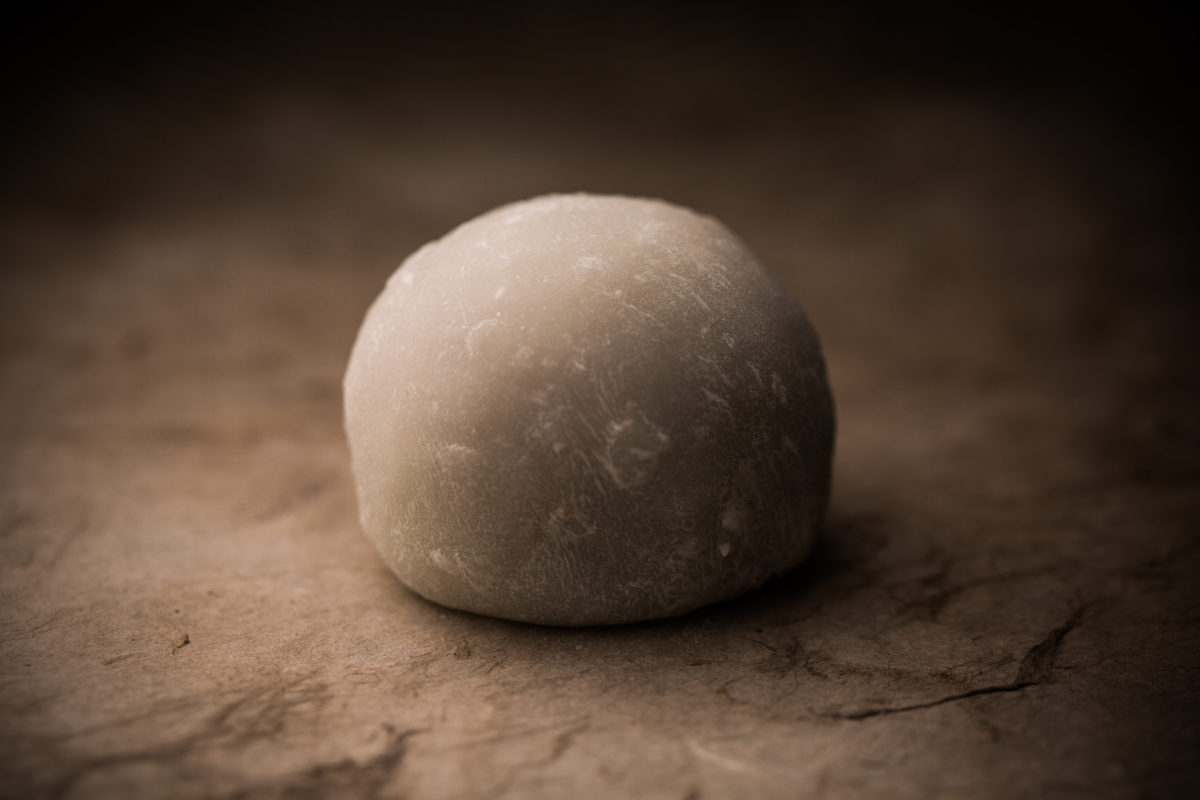
for T
— A Daifuku Made Without Sugar —
There is a customer we call T.
T has a remarkably pure spirit and cannot accept anything that feels less than pure.
This daifuku was made especially for T.
Nothing unnecessary.
Nothing excessive.
Ingredients:
Mochi, azuki beans, and honey
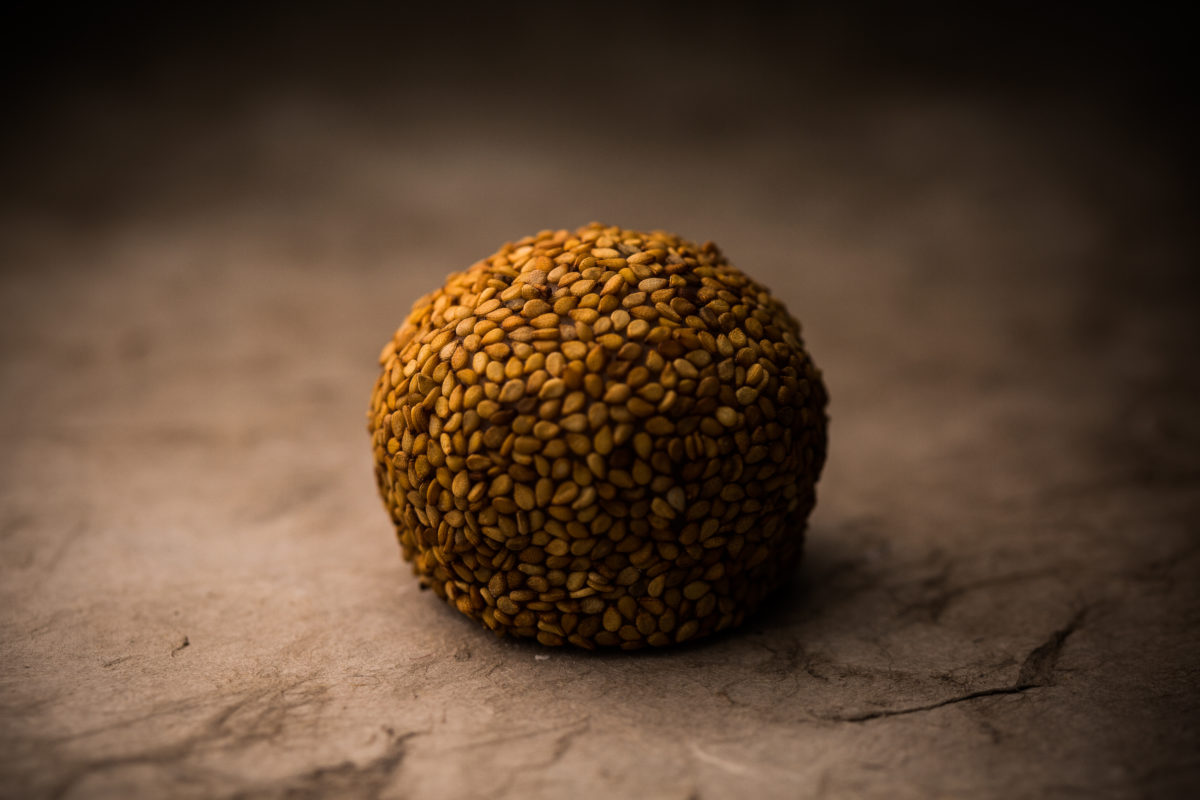
Flower
— Perhaps a Flower Will Bloom —
When you take a bite,
if a few sesame seeds happen to fall to the ground and return to the soil,
perhaps, in time, a flower will bloom.
This is possible because the golden sesame we use is alive still a seed.
It is grown through natural farming by Mr. Maruse,
the only farmer in Japan cultivating sesame in this way.
Ingredients:
Sugar, sweet rice flour, azuki beans, golden sesame
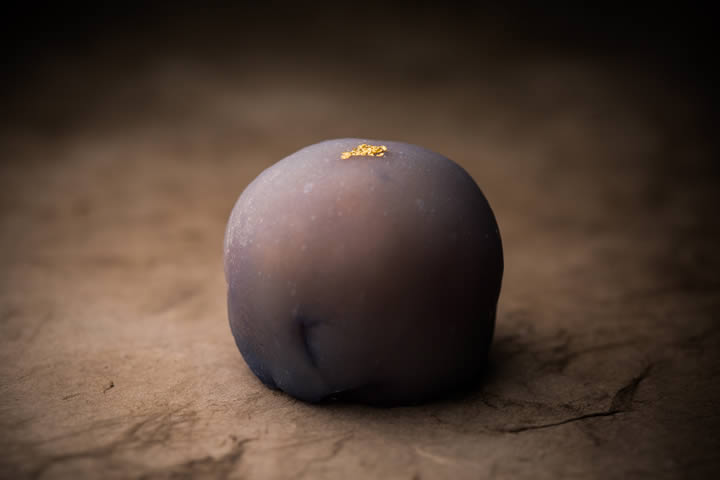
Raspberry Daifuku(Blue Version)
— On the Relationship Between Sight and Taste —
It is often said that blue food does not stimulate the appetite.
Our red version was warmly received.
But what happens when it turns blue?
Of course, the blue comes from herbs.
Taste is often said to begin with the eyes.
Perhaps this daifuku invites you to question that assumption.
Ingredients:
Raspberry, sugar, white bean paste, rice flour, sweet rice flour, potato starch, rum, butterfly pea flower, gold leaf

Seishin-gan
— The Original Herbal Supplement —
It is said that when the Buddha undertook severe ascetic practices in search of enlightenment,
he sustained his life not with ordinary meals,but with small nourishment made from sprouted Job’s tears, honey, and kneaded black sesame.
“Seishin-gan” is inspired by that simple, life-sustaining food.
Perhaps long before modern supplements,
there were quiet foods created simply to sustain the body
and steady the spirit.
Ingredients:
Sugar, sweet rice flour, black sesame, honey, sprouted Job’s tears, gold leaf
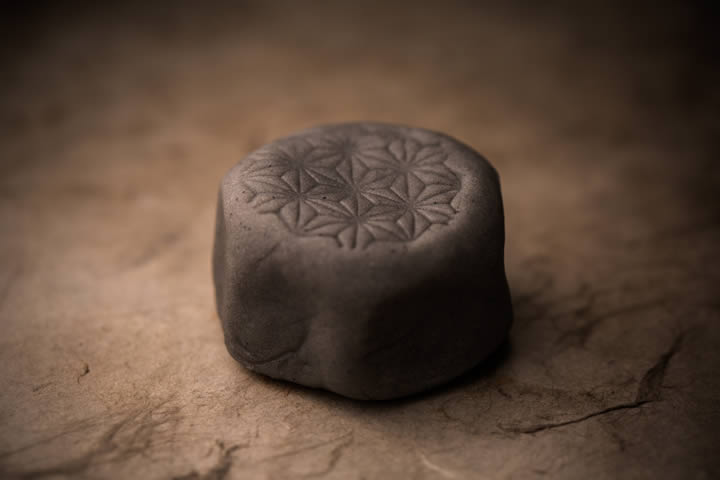
Earth
— Eating the Soil —
In certain sacred places, such as Sedona, the earth itself is regarded as living.
It is said that some Native American communities, as well as the Ainu people of Japan, would mix small amounts of earth into food for restoration and healing during times of exhaustion.
Soil contains trace minerals that humans cannot create, including silica, and is believed to help cleanse the body gently.
In this sweet, edible diatomaceous earth is combined with azuki beans and sugar.
Yamato-imo, known for its nourishing strength, binds the ingredients together, and bamboo charcoal is kneaded into the mixture.
The hexagonal shape is intentional.
Please take a moment to feel the quiet power of geometry and the energy of the earth itself.
Ingredients:
Azuki beans, sugar, Yamato-imo (Japanese mountain yam), edible diatomaceous earth (silica), bamboo charcoal
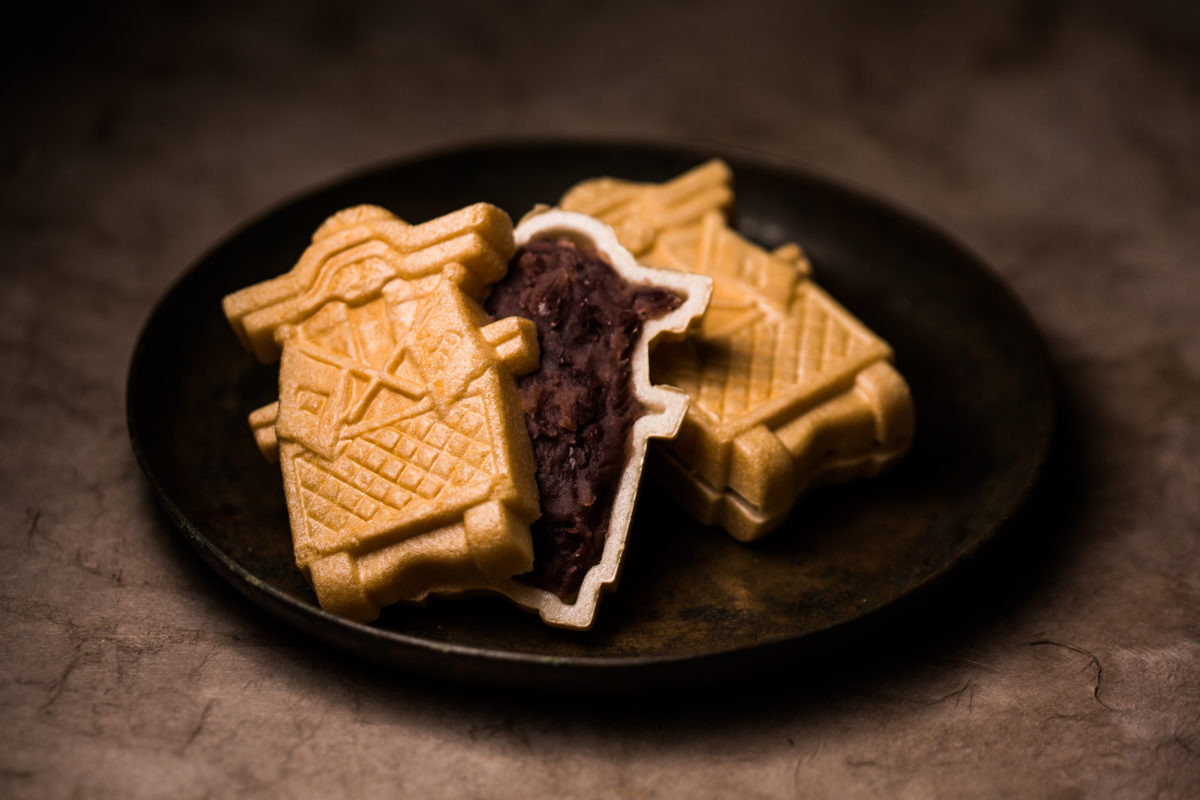
Danjiri Monaka
— Monaka Shaped Like a Festival Float —
This monaka is shaped after a danjiri a traditional wooden festival float from Osaka’s Danjiri Festival, pulled through the streets as part of a centuries-old celebration.
To preserve the delicate crispness of the monaka shell, we invite you to fill it yourself with azuki bean paste just before eating.
Because of the intricate form of the danjiri, the shell holds small pockets of air.
As you bite into it, air enters together with the sweetness, creating a lighter texture and enhancing the crisp sensation.
A shape born from celebration becomes a study in texture.
Ingredients:
Azuki beans, sugar, glutinous rice
Classics / Shinmachi

Black Soybean Mochi
— Honoring the Ingredient in Its Purest Form —
Every morning, black soybeans from Tanba are gently salted and boiled.
Freshly pounded mochi is wrapped around smooth azuki bean paste.
With the fewest possible steps,
we allow the finest ingredients to speak for themselves.
Ingredients:
Glutinous rice, azuki beans, sugar, black soybeans, salt
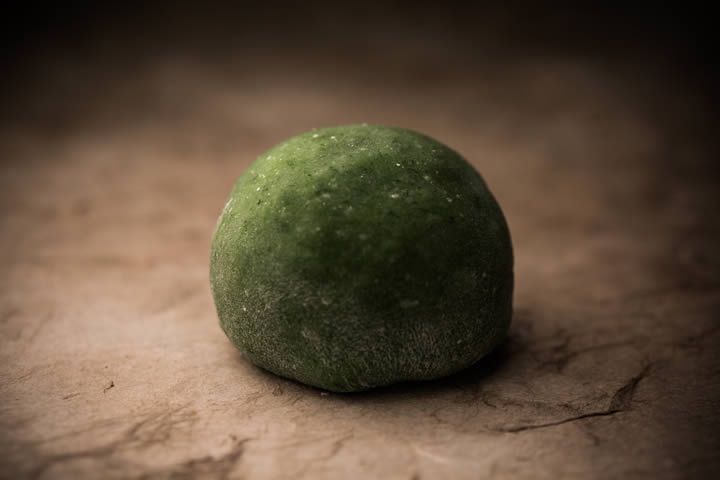
Mugwort Mochi
— The Queen of Herbs —
Mugwort has long been used in traditional Japanese sweets, often without much thought.
Yet it is a remarkable medicinal herb.
Sometimes called the “Queen of Herbs,” mugwort has been valued across cultures for its vitality and resilience.
Recent scientific research has drawn attention to compounds found in mugwort, including artemisinin, which has been studied for its unique biological properties. Mugwort is also rich in vitamin A, known to support the body’s natural defenses.
In kusa-mochi, this ancient herb is kneaded into freshly pounded rice cake, giving it its distinctive green color, fragrance, and quiet strength.
Ingredients:
Glutinous rice, azuki beans, sugar, mugwort, salt
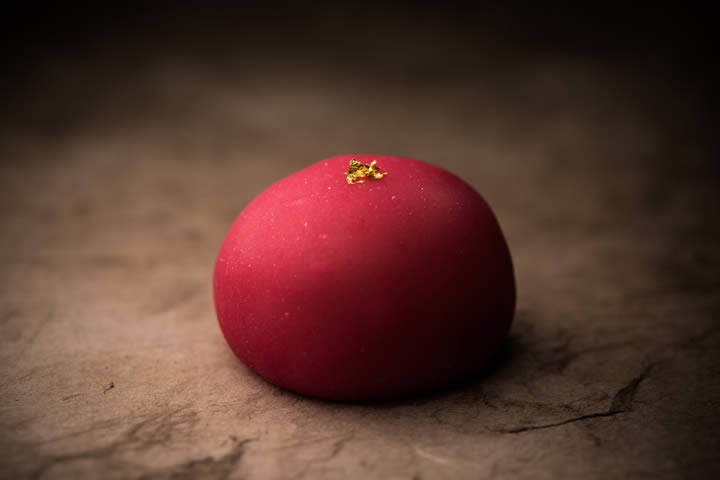
Raspberry Daifuku
— What Comes from Nature Dissolves in Water —
This almost startling shade of comes not from artificial coloring,
but from beetroot.
We grate fresh beets and press them through white cloth.
The cloth turns a vivid yet with water alone, it returns to white.
Nature leaves its but it does not cling.
Perhaps the body, too, understands this quiet logic.
Ingredients:
Raspberry, sugar, white bean paste, rice flour, sweet rice flour, potato starch, rum, beetroot, gold leaf
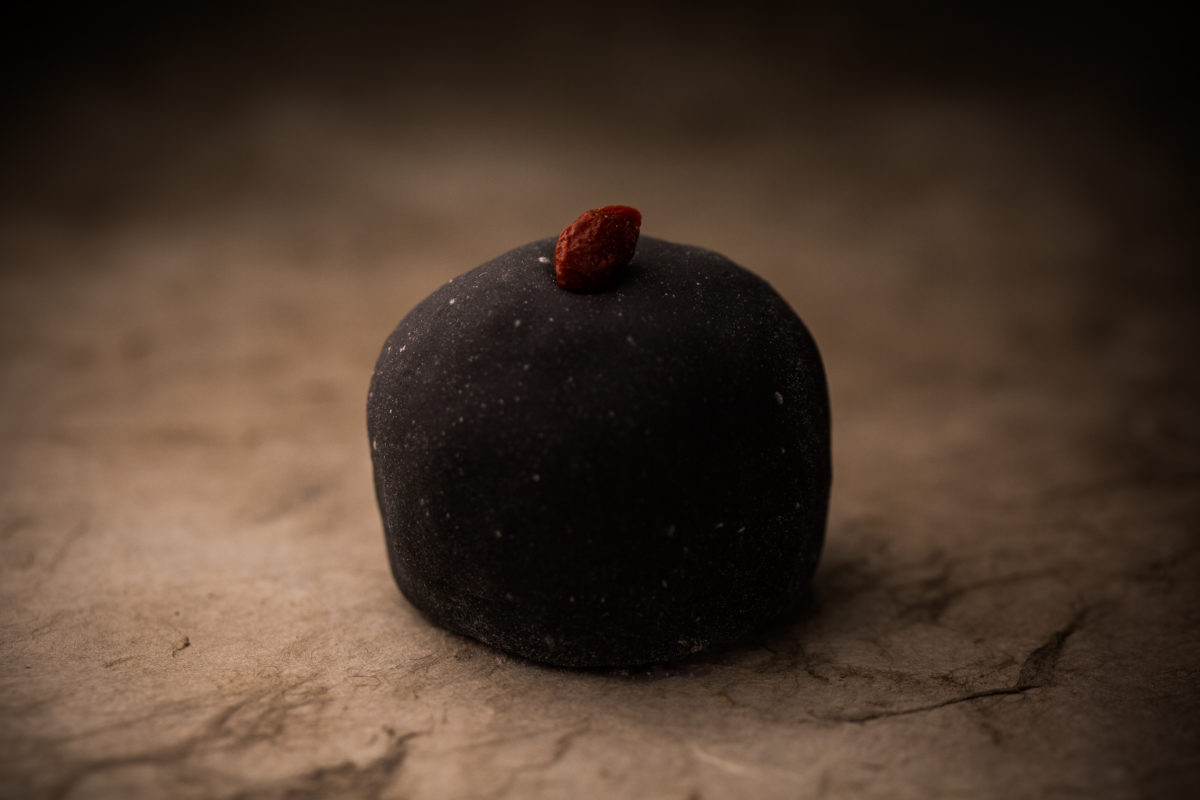
Black Mochi
— Misogi / Ritual Purification —
Before adding anything to the body,
there is something more essential to clear and reset.
In Japan, misogi refers to a traditional act of purification.
This sweet draws inspiration from that idea.
Bamboo-like hemp, a plant long regarded in Japan as both sacred and protective, is transformed into fine charcoal and kneaded into the mochi.
Rather than “adding,” it reflects on the quiet act of Dark in color, simple in composition,it invites a moment of inner stillness.
Ingredients:
Black soybeans, sugar, sweet rice flour, goji berries, hemp charcoal
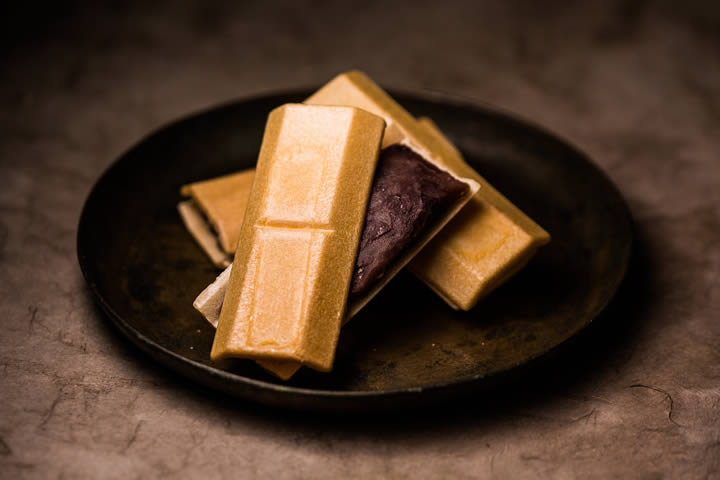
Monaka
— OVERCOME —
Traditional monaka has its weaknesses.
When filled in advance, the crisp shell gradually absorbs moisture from the sweet bean paste.
The texture softens. The contrast is lost.
To overcome this, we make the shell delicately crisp and fragrant, and prepare a lightly sweet, fresh azuki filling.
There is only one small request:
we ask you to assemble it yourself, just before eating.
With that simple act,
the balance is restored crisp and moist, light and rich, existing together for a brief moment.
Ingredients:
Azuki beans, sugar, glutinous rice
Classics / Kishiwada, Shinmachi
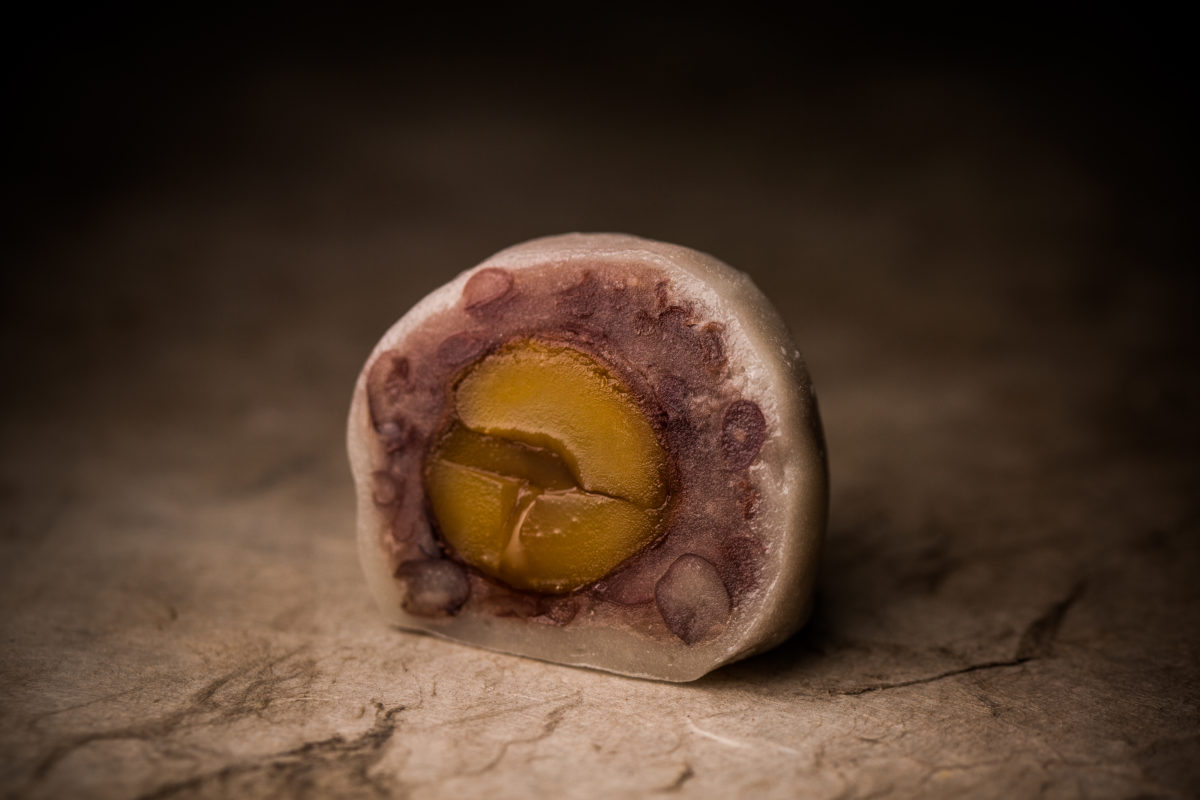
Chestnut Daifuku
A gently simmered chestnut, still wrapped in its delicate inner skin,
is enveloped in fresh, lightly sweet azuki bean paste
and soft habutae mochi.
Simple layers,
allowing the natural depth of the chestnut to unfold.
Ingredients:
Chestnut, sugar, azuki beans, sweet rice flour
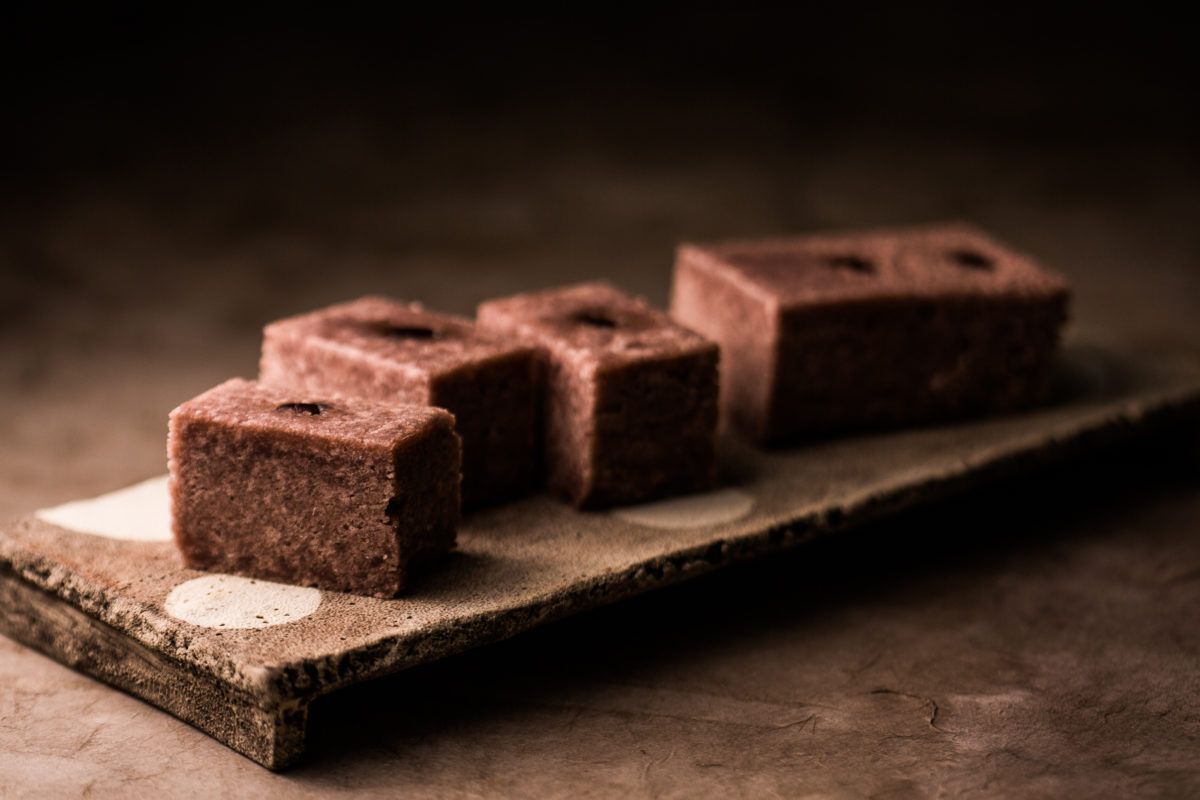
Shigure
— The Flavor in Its Pure Form —
Created to let the natural character of azuki beans be fully experienced,
this simple steamed sweet is made with naturally farmed rice flour
and just a modest sweetness from organic sugar.
Nothing more than what is needed.
Ingredients:
Azuki beans, sugar, rice flour, sweet rice flour, salt
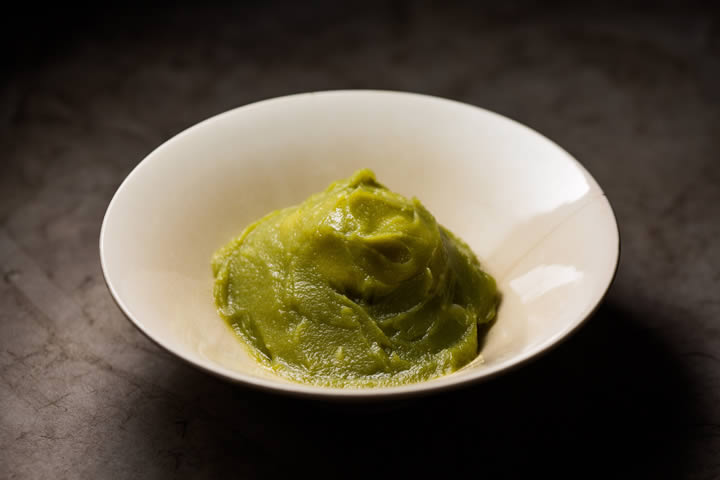
Kurumi Mochi
— An Unfamiliar Sweet —
“Kurumi mochi” may sound unfamiliar to those outside southern Osaka.
Despite its name, it does not contain walnuts.
The word kurumi comes from kurumu meaning “to wrap.”
Softly pounded mochi is enveloped in a creamy edamame paste,
or alternatively wrapped in a smooth soybean paste.
Two both centered on the gentle act of wrapping.
Ingredients:
Mochi (glutinous rice), edamame, sugar, salt, rice syrup